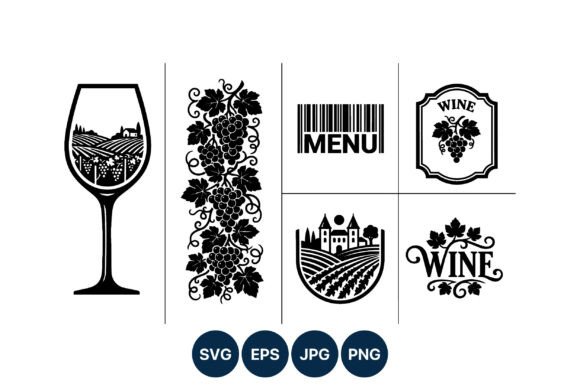
Refining Brand Identity with the Grape Vineyard Wine Glass Barcode Vector
In the contemporary landscape of visual branding, the intersection of artisanal craftsmanship and digital precision has become a critical focal point for designers and entrepreneurs alike. The Grape Vineyard Wine Glass Barcode Vector represents more than a simple graphic asset; it is a sophisticated synthesis of traditional viticulture imagery and modern commercial utility. This specific design element merges the romanticism of the vineyard with the stark functionality of retail identification, creating a versatile tool for wineries, packaging designers, and marketing professionals who seek to bridge the gap between aesthetic appeal and operational efficiency.
The core of this asset lies in its intricate composition. It features black vector line art that meticulously outlines a grapevine cluster, seamlessly integrated into the silhouette of a wine glass. Within this glass, a detailed vineyard landscape unfolds, complete with rolling hills and a distant castle, evoking a sense of heritage and terroir. Surrounding this central motif is a decorative wine label adorned with additional grapes, while a barcode menu design is subtly incorporated into the structure. This juxtaposition is not accidental; it reflects the dual nature of modern wine consumption, where the story of the land is as important as the product’s scan-ability at the point of sale.
The Convergence of Aesthetics and Utility in Modern Packaging
Historically, wine labels were treated as separate entities from logistical requirements. The barcode was often an afterthought, placed discreetly on the back or bottom of the bottle, disconnected from the primary brand narrative. However, consumer expectations have shifted. Today’s buyers are increasingly discerning, seeking transparency and authenticity even in the smallest details of packaging. The Grape Vineyard Wine Glass Barcode Vector addresses this shift by integrating the barcode into the artistic framework of the label design. This approach transforms a mandatory regulatory element into a deliberate design choice, enhancing the overall visual coherence of the product.
This trend aligns with broader movements in the creative industry where minimalism and high-contrast designs are gaining prominence. The use of black vector line art ensures that the image remains sharp and legible regardless of the printing medium or scale. Whether applied to a small business card, a large storefront banner, or a digital advertisement, the clarity of the vector format guarantees that the intricate details of the castle on the hills and the texture of the grape clusters remain distinct. This versatility is crucial for brands that operate across multiple touchpoints, from physical retail spaces to e-commerce platforms.
Technical Precision and Workflow Efficiency
For professionals such as freelancers, graphic designers, and marketing agencies, the technical specifications of design assets are paramount. The inclusion of a ZIP folder containing SVG, PNG, JPG, and EPS files caters to diverse workflow needs. SVG and EPS formats are particularly valuable because they are resolution-independent. This means that the artwork can be scaled infinitely without losing quality, a feature essential for large-format printing or high-resolution digital displays. The provision of 100 vector SVG EPS files ensures that users have access to sharp results at any size, eliminating the common frustration of pixelation associated with raster images.
The high-contrast nature of the black line art also simplifies the printing process. For small batch producers or boutique wineries that may not have access to expensive multi-color printing technologies, a monochromatic design offers a cost-effective yet elegant solution. It reduces ink usage while maintaining a premium look, appealing to eco-conscious consumers who appreciate sustainable production methods. Furthermore, the clean lines facilitate easy customization. Designers can quickly adjust colors, add text, or modify elements to fit specific brand guidelines without compromising the integrity of the original artwork.
Strategic Applications Across Industries
While the primary application of the Grape Vineyard Wine Glass Barcode Vector is obviously within the wine and spirits industry, its utility extends far beyond. Hospitality businesses, such as restaurants and bars, can utilize this graphic for menu designs, loyalty cards, or promotional materials. The integration of the barcode motif serves as a subtle nod to the commercial aspect of their offerings, while the vineyard imagery reinforces the quality and origin of their products. This dual messaging is powerful in building brand trust and recognition.
Moreover, this asset is highly relevant for entrepreneurs in the lifestyle and gourmet food sectors. Artisanal cheese makers, olive oil producers, and craft beverage creators often share similar branding challenges with wineries: conveying tradition, quality, and authenticity. The universal symbolism of the grapevine and the wine glass transcends specific product categories, making it a adaptable resource for any brand that wishes to evoke a sense of European elegance and agricultural heritage. By incorporating this vector into their visual identity, these businesses can align themselves with the perceived prestige of the wine industry.
- Versatility: Suitable for print, web, and merchandise applications due to multiple file formats.
- Brand Cohesion: Integrates logistical elements like barcodes into the core artistic narrative.
- Scalability: Vector-based ensures crisp edges and clear details at any dimension.
- Cost-Effectiveness: High-contrast black line art reduces printing costs and complexity.
Meeting the Evolving Needs of Digital-First Consumers
The modern consumer interacts with brands through a hybrid of physical and digital experiences. QR codes and scannable barcodes are no longer just inventory tools; they are gateways to deeper engagement. When a customer scans a code on a wine bottle, they might expect to see the vineyard’s history, tasting notes, or food pairing suggestions. The Grape Vineyard Wine Glass Barcode Vector visually prepares the consumer for this interaction by making the barcode a prominent part of the design. It signals that the brand is technologically savvy and ready to provide additional value through digital channels.
This alignment with digital trends is essential for staying competitive. As augmented reality (AR) and near-field communication (NFC) technologies become more prevalent in retail packaging, having a design that naturally incorporates scanning elements will become increasingly important. The vector’s clean lines and structured layout make it an ideal candidate for overlaying with interactive digital layers, allowing brands to create immersive experiences that blend the physical product with digital content.
Why Professionals Are Prioritizing Integrated Design Assets
The growing attention paid to assets like the Grape Vineyard Wine Glass Barcode Vector stems from a broader realization in the design community: efficiency does not have to come at the expense of creativity. In the past, designers often had to choose between custom illustrations and stock templates. Custom work was time-consuming and expensive, while stock templates lacked uniqueness. High-quality vector packs that offer both artistic merit and functional utility provide a middle ground. They allow creators to produce professional-grade work quickly, freeing up time for strategic thinking and client interaction.
Furthermore, the demand for such specific, niche-themed vectors indicates a maturation of the stock asset market. Users are no longer satisfied with generic icons; they seek context-rich graphics that tell a story. The inclusion of the castle on the hills and the detailed vineyard landscape within the wine glass adds narrative depth that generic clipart lacks. This level of detail resonates with audiences who value storytelling and authenticity, making it a powerful tool for brands looking to differentiate themselves in a crowded marketplace.
- Identify the Brand Narrative: Determine how the vineyard and castle imagery aligns with your brand’s story of heritage and quality.
- Select the Appropriate Format: Use SVG or EPS for print and scalable web elements; use PNG or JPG for quick digital previews or social media.
- Integrate Seamlessly: Ensure the barcode element functions technically while maintaining visual harmony with the rest of the label design.
- Leverage Multi-Channel Consistency: Apply the same vector across packaging, websites, and marketing materials to reinforce brand recognition.
In conclusion, the Grape Vineyard Wine Glass Barcode Vector is a testament to the evolving nature of design in the commercial sector. It embodies the need for solutions that are both aesthetically pleasing and functionally robust. By combining the timeless allure of the vineyard with the modern necessity of the barcode, this asset offers a unique value proposition for professionals across various industries. As workflows become more digital and consumer expectations more demanding, tools that bridge these divides will continue to gain prominence. For creators and entrepreneurs looking to elevate their brand presence, investing in such high-quality, versatile design resources is a strategic move that pays dividends in both efficiency and impact.
The availability of multiple file formats ensures that this asset can adapt to any project requirement, from high-end print runs to dynamic digital campaigns. The high-contrast black line art provides a timeless elegance that avoids trending fads, ensuring longevity in design relevance. Ultimately, the adoption of such integrated vectors reflects a deeper understanding of the holistic nature of modern branding, where every element, down to the barcode, contributes to the overall consumer experience.